Launch offer — valid today only

📄 Digital book in PDF · read it on your phone or print it

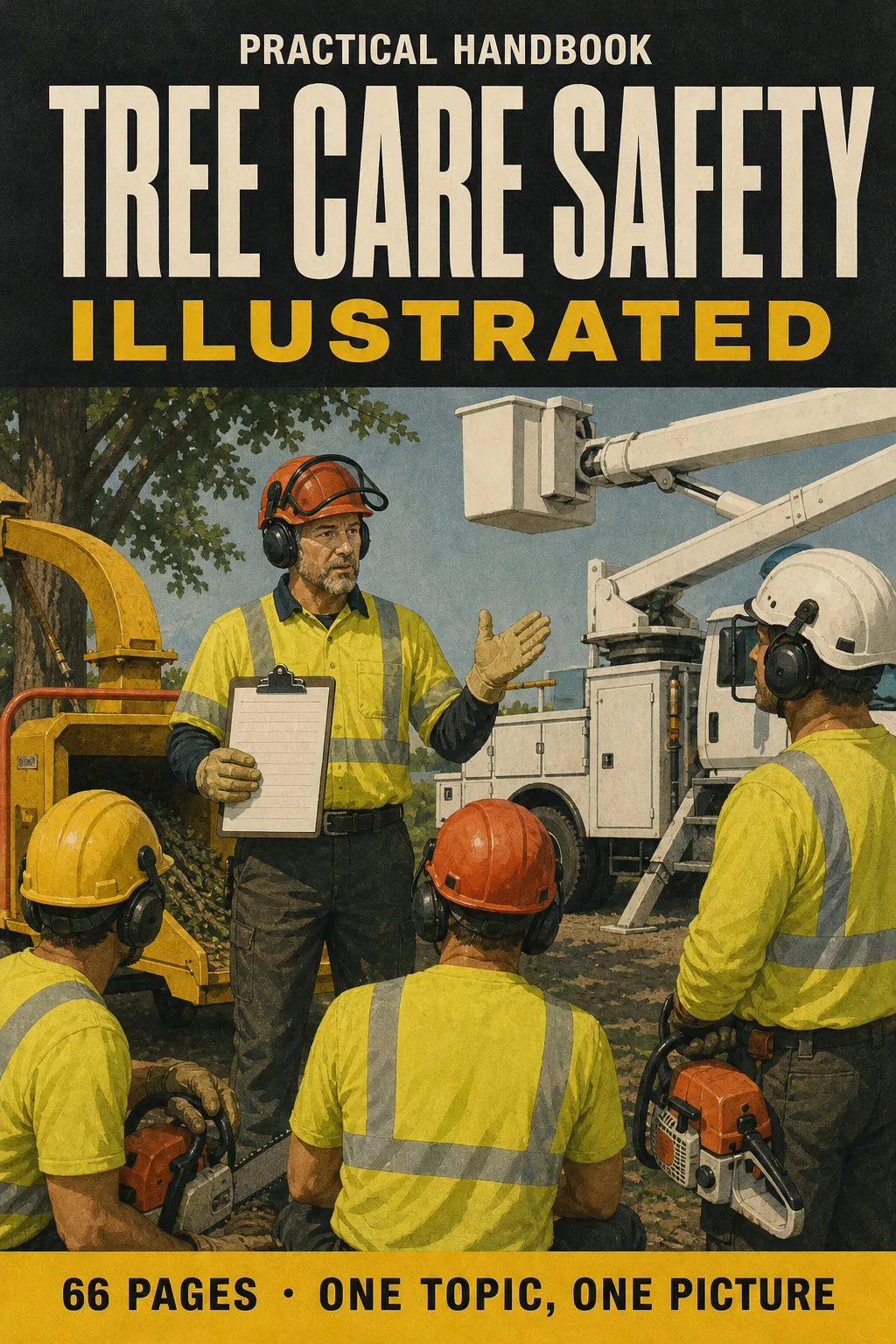
Tree Care Safety Illustrated: ANSI Z133 and OSHA in Drawings One Topic per Page, in the Same Order as the Job

Job briefing, PPE, work zones, approach distances, climbing systems, aerial lifts, rigging forces, chain saws, chippers and aerial rescue. Every topic gets its own page: the drawing first, then what you need to remember. 66 illustrated pages.

START STUDYING THIS WAY

🔒 Secure checkout · PDF by email · 30-day guarantee

Every topic, its own pageEach safety rule drawn, with the explanation right next to it
66 illustrated pages9 parts, from who writes the rules to the crew checklist before leaving the yard
Up-to-date sourcesANSI Z133 (current edition) and OSHA 29 CFR 1910.269
PDF by emailFormat

Look Inside the Book

Every page has one big drawing and a box with the rules and numbers you need to know:

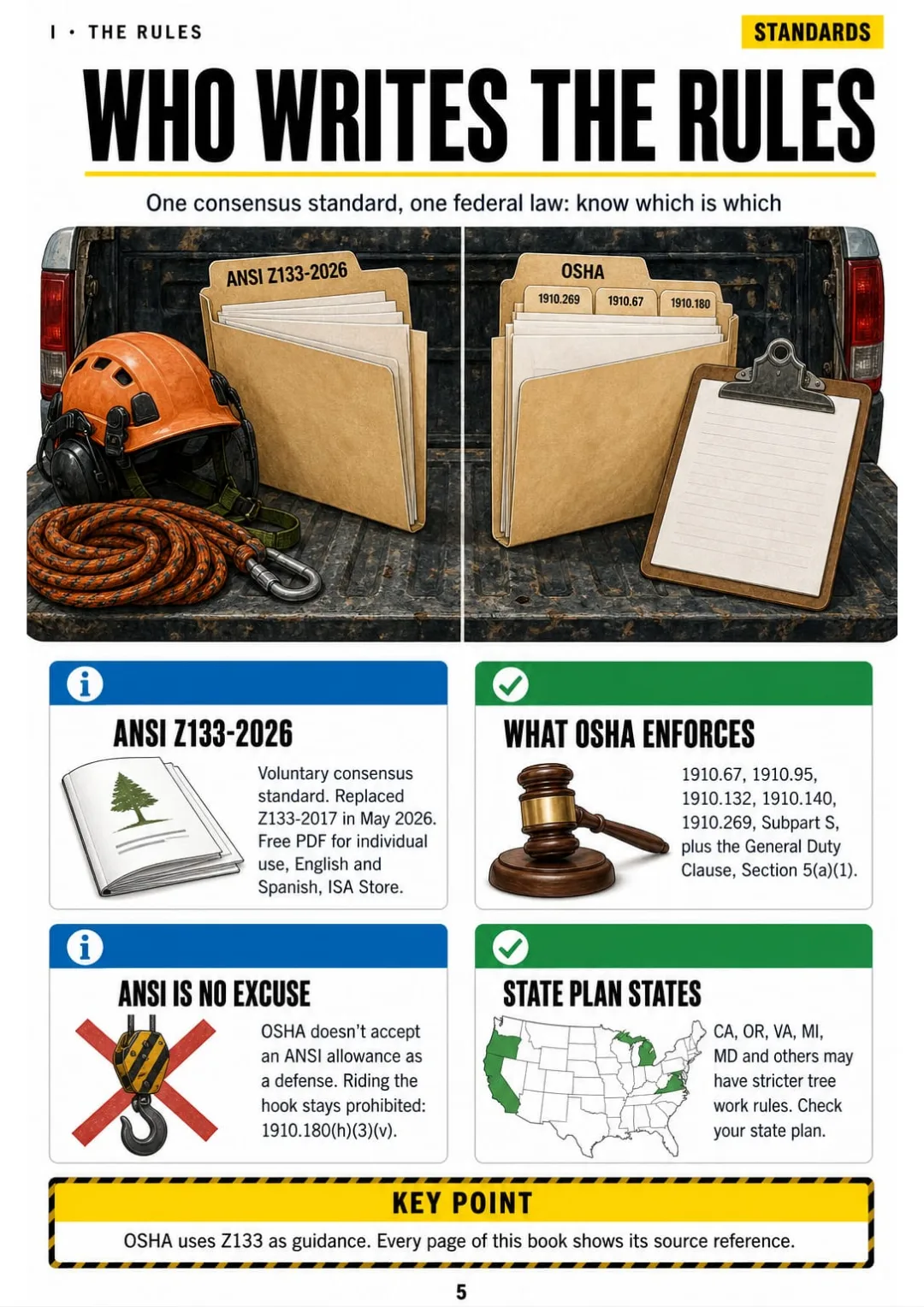
ANSI Z133-2026 is a consensus standard; OSHA enforces 1910.269, 1910.67 and the General Duty Clause.
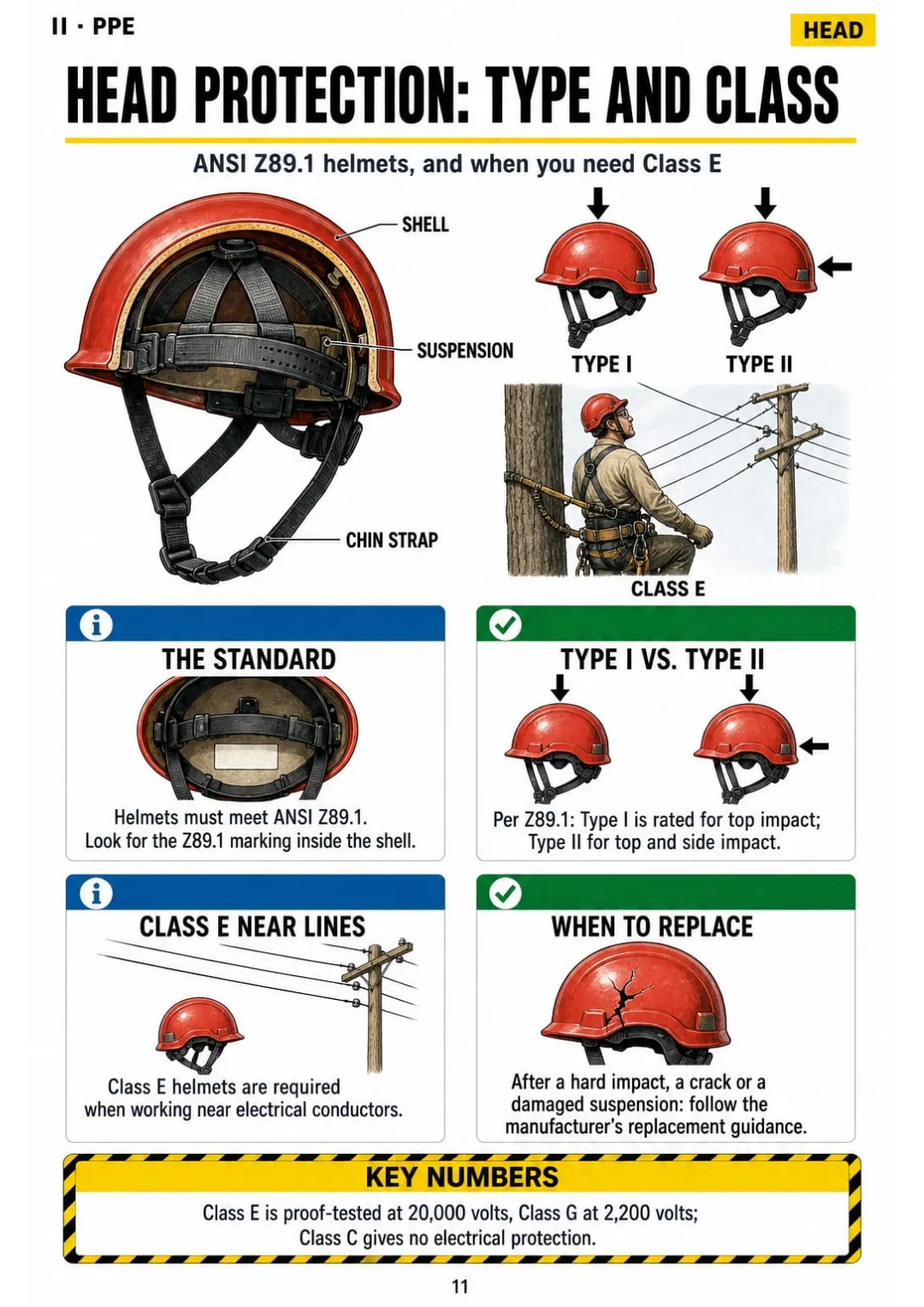
ANSI Z89.1 helmets: Type I top, Type II top and side, Class E near conductors
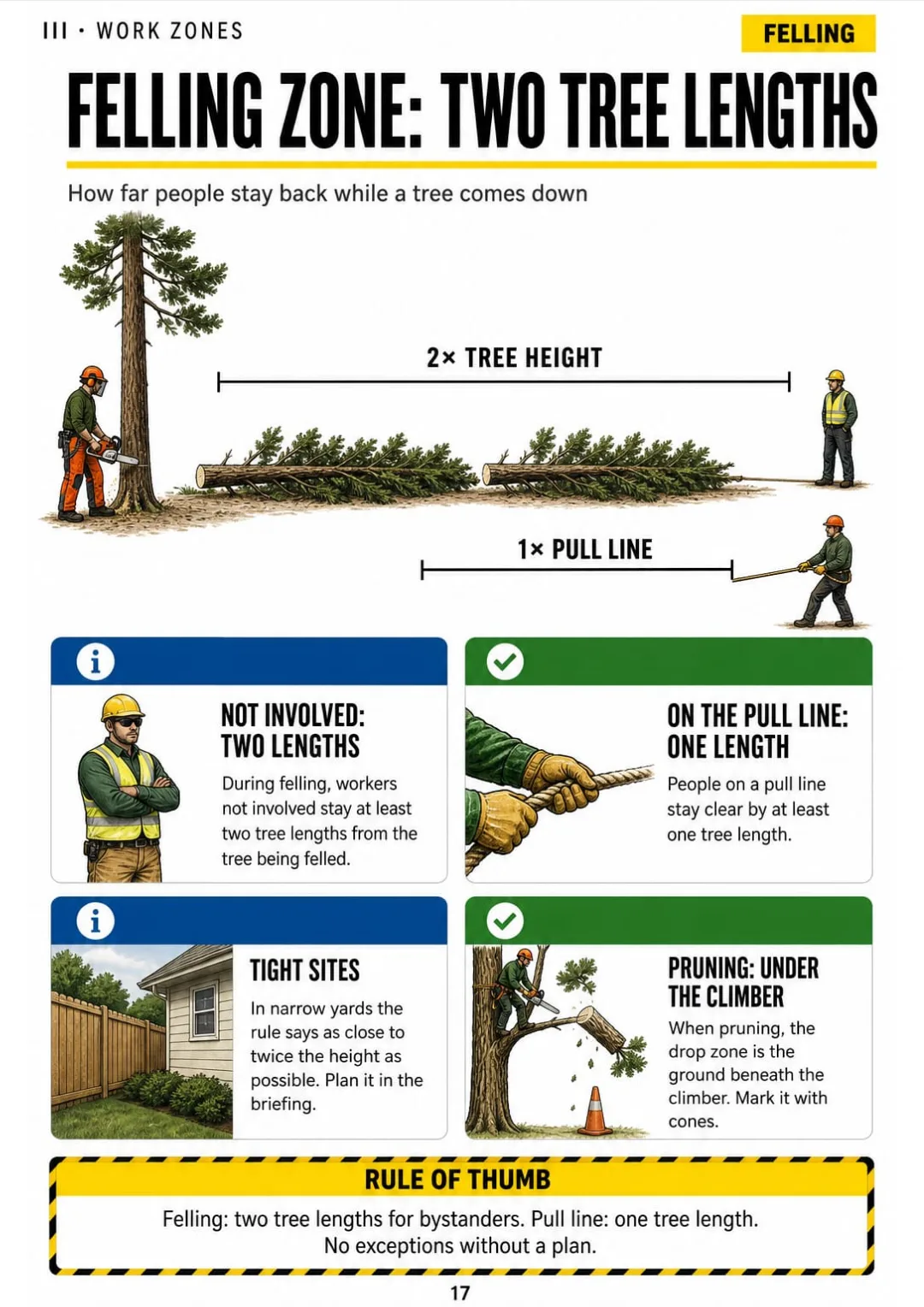
Felling: non-involved workers stay at least two tree lengths away; pull line, one length.
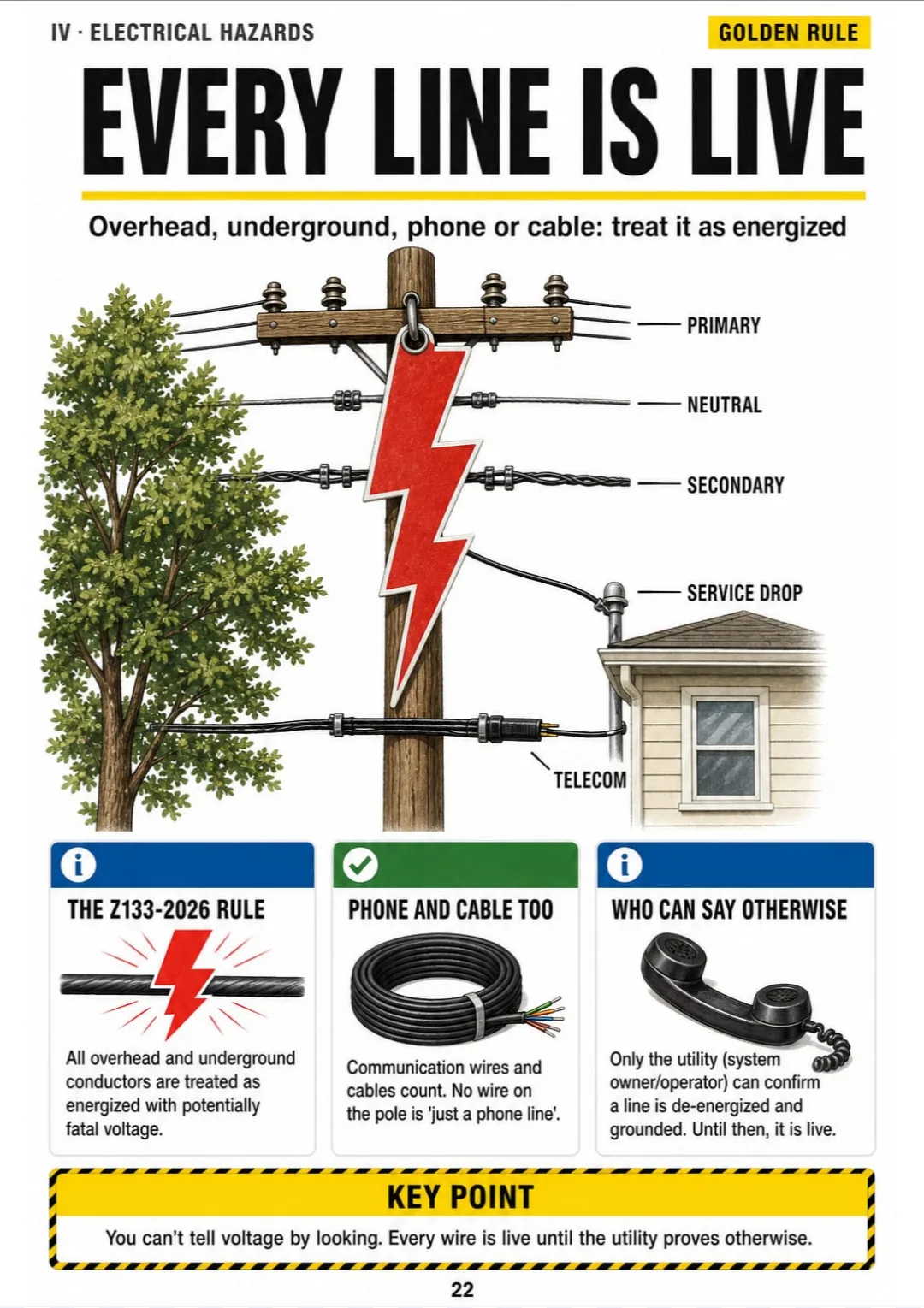
Z133-2026: every overhead, underground and communication wire is treated as energized.
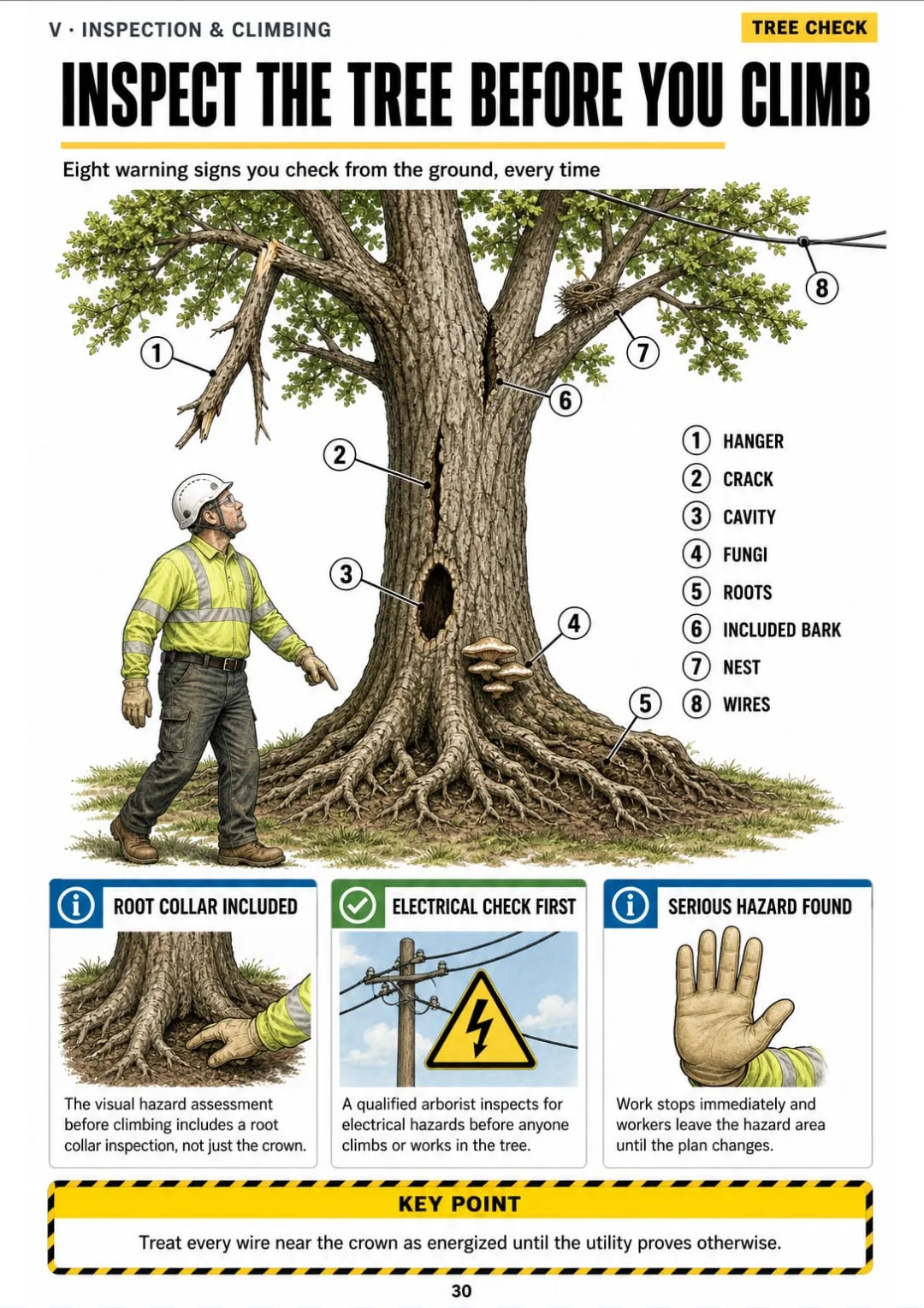
8 warning signs, root collar included, and the electrical check before anyone climbs.
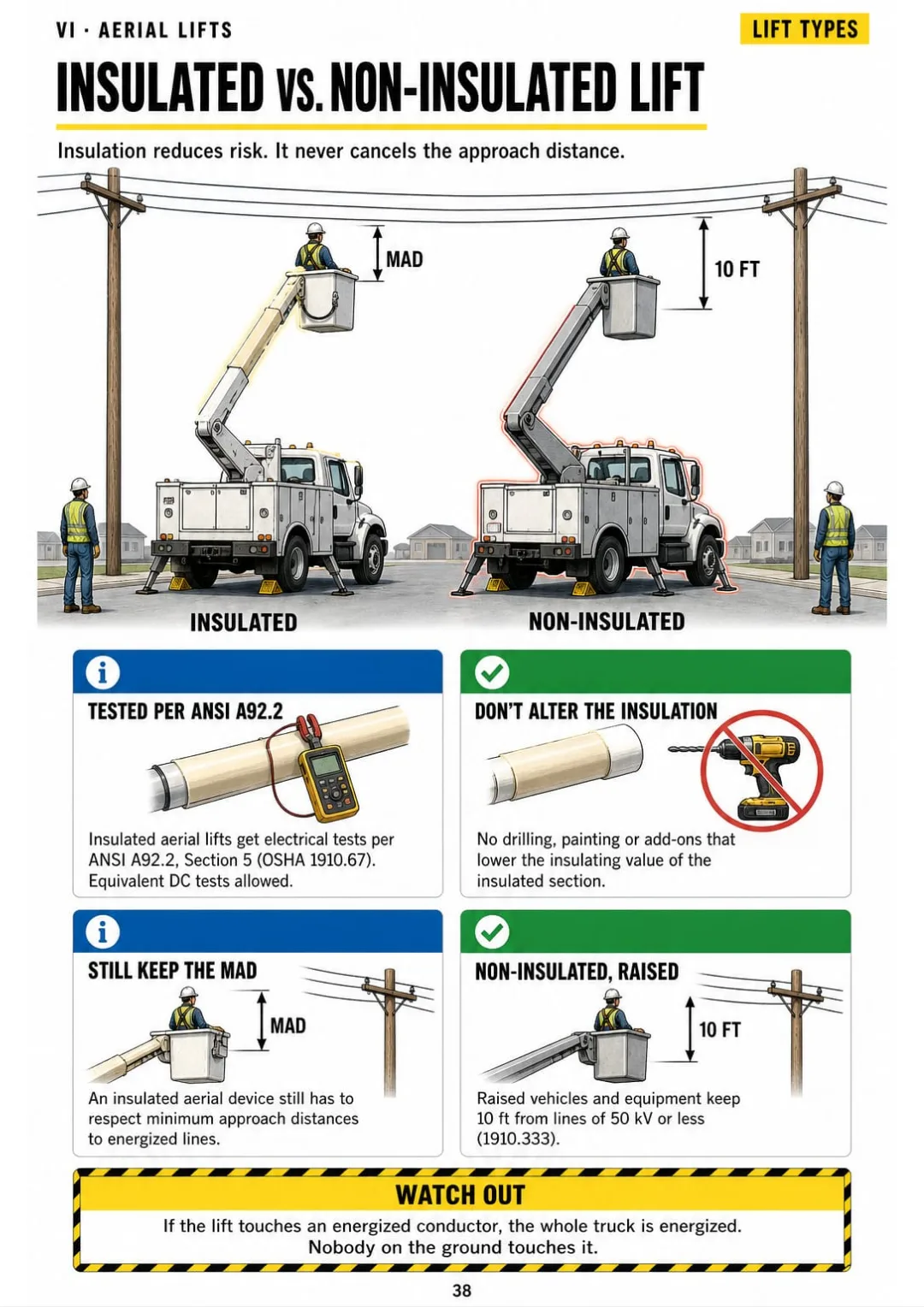
Insulated booms are tested per ANSI A92.2, and they still keep the minimum approach distance.
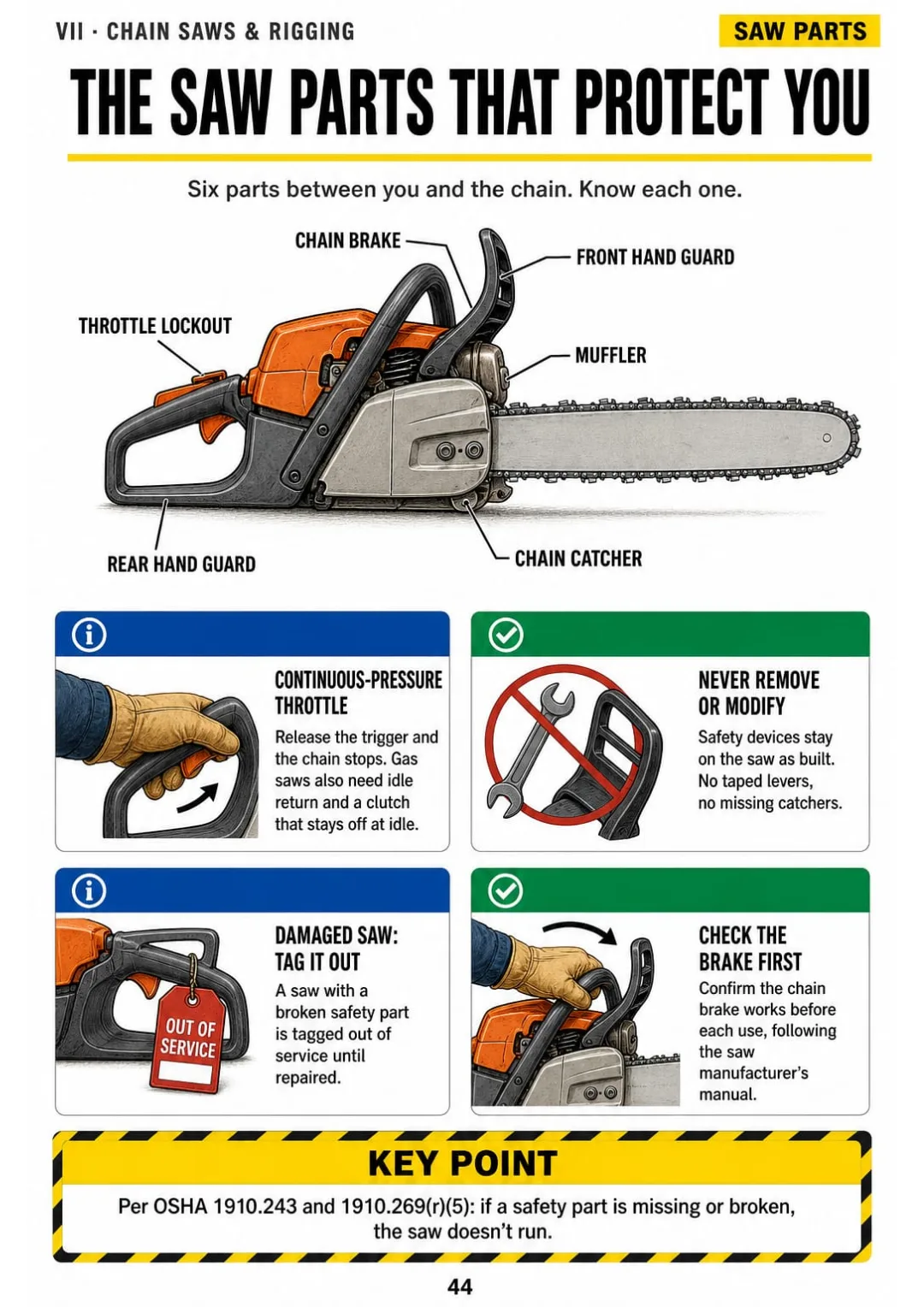
Chain brake, catcher, throttle lockout: every safety part labeled on one saw.
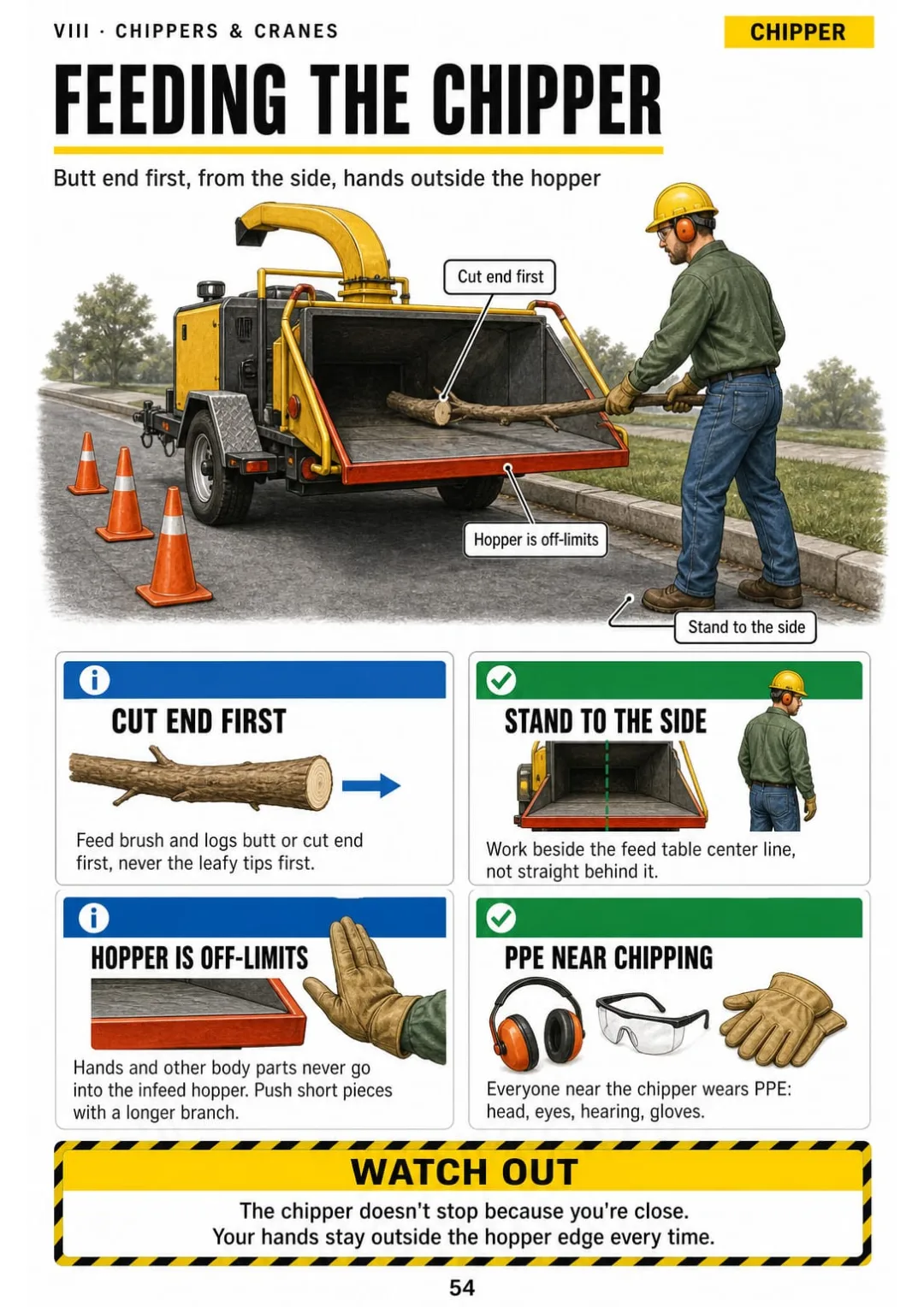
Chipper from above: butt end first, stand off the center line, nothing past the hopper edge.

Swipe to see more →

These are real pages from the book. The table of contents is the full one: 9 parts and 62 topics.

The Problem Isn't You. It's How It Was Explained to You.

You're on a removal on a residential street, and a neighbor walks right under the limb you're about to drop. Where does the work zone end, and who was supposed to keep it clear?

You read that section last night. The zones are described in words, one after the other, with nothing that shows you where one ends and the next one starts.

Felling: non-involved workers stay at least two tree lengths away; pull line, one length.

In this book the work zone is an overhead diagram: the tree in the middle, the drop zone around it, then the work zone, then the public zone with the cones and the street. And one line in the box: the zones go up before the rigging does.

Every other crew topic gets the same treatment: the job briefing in 5 steps, the approach distances, the kickback zone on the bar, the chipper seen from above, aerial rescue.

You see it once and you set it up right on the next job, without digging the manual out of the truck.

COMPARE FOR YOURSELF

Same Topic, Two Ways to Study It

THIS
  • The manual: line after line of text
  • Helmet types and classes explained only in words
  • You show up at the exam still unsure
Head protection shall comply with the applicable requirements of ANSI Z89.1, which classifies industrial helmets by type, according to the direction of impact against which protection is afforded, and by class, according to the degree of electrical insulation provided. Type I helmets are intended to reduce the force of impact resulting from a blow only to the top of the head, whereas Type II helmets are further intended to reduce the force of lateral impact. Class E helmets are proof-tested at 20,000 volts, Class G at 2,200 volts, and Class C helmets afford no electrical protection.
FOR THIS
  • Type I, Type II and Class E in one drawing
  • The ratings in one box
  • You see it and you get it
ANSI Z89.1 helmets: Type I top, Type II top and side, Class E near conductors
CONTENTS

Take a Look at the 9 Parts and 62 Topics

The rules and the job briefing, PPE, work zones, electrical hazards, tree inspection and climbing, aerial lifts, chain saws and rigging, chippers and cranes, and emergencies with aerial rescue: 66 pages, all illustrated.

IThe Rules and the Job Briefing · pp. 5-10
  1. Who Writes the Rules: ANSI Z133 and OSHA
  2. Qualified Arborist vs. Line-Clearance Arborist
  3. The Job Briefing in 5 Steps, Always in the Same Order
  4. Walk-Around Site Survey
  5. Who Is the Person in Charge
  6. Training Records That Hold Up
IIPPE from Head to Toe · pp. 11-15
  1. Head Protection: Type and Class
  2. Eyes, Face and Hearing
  3. Chain Saw Leg Protection
  4. Hands, Feet and Clothing
  5. PPE Check Before Every Shift
IIIWork Zones, Traffic and Communication · pp. 16-21
  1. The Work Zone Seen from Above
  2. Felling Zone: Two Tree Lengths
  3. Traffic Control on the Street
  4. Command and Response
  5. Hand Signals for the Crew
  6. Weather Calls: Wind, Lightning and Heat
IVElectrical Hazards · pp. 22-29
  1. Every Line Is Energized Until Proven Otherwise
  2. Direct and Indirect Contact
  3. Minimum Approach Distance: Not Qualified
  4. Minimum Approach Distance: Line-Clearance Qualified
  5. Step and Touch Potential
  6. Line Clearance Tools: Insulated Is Not Forever
  7. Downed Lines and Storm Work
  8. Electrical Contact: What the Ground Worker Does
VTree Inspection and Climbing · pp. 30-37
  1. Inspect the Tree Before You Climb
  2. Climbing Line and Hardware Strength
  3. Harness, Saddle and Lanyard
  4. Choosing the Tie-In Point
  5. MRS vs. SRS in One Look
  6. Ascent Methods
  7. Two Points of Attachment with a Chain Saw
  8. Spurs Only for Removals
VIAerial Lifts · pp. 38-43
  1. Insulated vs. Non-Insulated Lift
  2. Pre-Use Inspection
  3. Setup: Outriggers, Slope and Wheel Chocks
  4. Fall Protection in the Bucket
  5. Load Capacity and the Bucket
  6. Lower Controls and Emergency Lowering
VIIChain Saws, Felling and Rigging · pp. 44-53
  1. The Chain Saw Parts That Protect You
  2. Kickback Zone on the Bar
  3. Starting the Saw Safely
  4. Saws in the Tree: Support and Handling
  5. Notch, Hinge and Back Cut
  6. Escape Routes at 45 Degrees
  7. Rigging Forces with Arrows and Numbers
  8. Working Load Limit vs. Breaking Strength
  9. Lowering Devices and Friction
  10. Rope and Rigging Gear Inspection
VIIIChippers, Stump Grinders and Cranes · pp. 54-59
  1. Feeding the Chipper
  2. Chipper Controls and Lockout
  3. Stump Grinder Zone
  4. Crane-Assisted Removal: The Plan
  5. Cranes Near Power Lines
  6. Rigging the Pick and Riding the Hook
IXEmergencies, Aerial Rescue and Review · pp. 60-66
  1. The Emergency Plan on One Page
  2. Aerial Rescue: Assess Before You Climb
  3. Aerial Rescue from a Lift
  4. Aerial Rescue from the Rope
  5. First Aid Priorities on a Tree Job
  6. Exam Review: The Numbers to Know
  7. Crew Safety Checklist Before Leaving the Yard

One Page, One Topic, All Clear

Think of it this way:

It's 7 a.m. at the truck, the crew is waiting, and you have to run the job briefing before anybody gears up. Five steps, and you want them in the same order every single time.

You open the job briefing page and see the five steps drawn one after the other, with what to cover at each one and who signs off.

8 warning signs, root collar included, and the electrical check before anyone climbs.

Same with the approach distances, the tie-in point, the rigging forces, the chipper and aerial rescue: each one on its own page.

Tree Care Safety Illustrated is 9 parts and 62 topics, all drawn, and it ends with the exam numbers to know and a crew checklist before leaving the yard.

What you see drawn, you don't have to memorize.

What's Inside Tree Care Safety Illustrated:

Ipp. 5-10

The Rules and the Job Briefing

Who writes the rules (ANSI Z133 and OSHA), qualified vs. line-clearance arborist, the job briefing in 5 steps, the site survey, the person in charge and training records.

IIpp. 11-15

PPE from Head to Toe

Helmet type and class, eyes, face and hearing, chain saw leg protection, hands, feet and clothing, and the PPE check before every shift.

IIIpp. 16-21

Work Zones, Traffic and Communication

The work zone seen from above, the drop zone, traffic control on the street, command and response, hand signals and weather calls.

IVpp. 22-29

Electrical Hazards

Every line treated as energized, direct and indirect contact, the approach distances for each worker, step and touch potential, insulated tools, storm work and what the ground worker does.

Vpp. 30-37

Tree Inspection and Climbing

Inspecting the tree before you climb, line and hardware strength, harness and lanyard, the tie-in point, MRS vs. SRS, ascent methods, two points of attachment and spurs.

VIpp. 38-43

Aerial Lifts

Insulated vs. non-insulated lifts, pre-use inspection, outriggers and slope, fall protection in the bucket, load capacity and emergency lowering.

VIIpp. 44-53

Chain Saws, Felling and Rigging

The saw parts that protect you, the kickback zone, starting the saw, notch, hinge and back cut, escape routes, rigging forces, working load limit, lowering devices and gear inspection.

VIIIpp. 54-59

Chippers, Stump Grinders and Cranes

Feeding the chipper, controls and lockout, the stump grinder zone, the crane removal plan, cranes near power lines and rigging the pick.

IXpp. 60-66

Emergencies, Aerial Rescue and Review

The emergency plan on one page, aerial rescue from a lift and from the rope, first aid priorities, the exam numbers to know and the crew checklist before leaving the yard.

At the end of the book: An exam review page with the numbers to know and a crew checklist before leaving the yard.
Plus: 2 Free Books

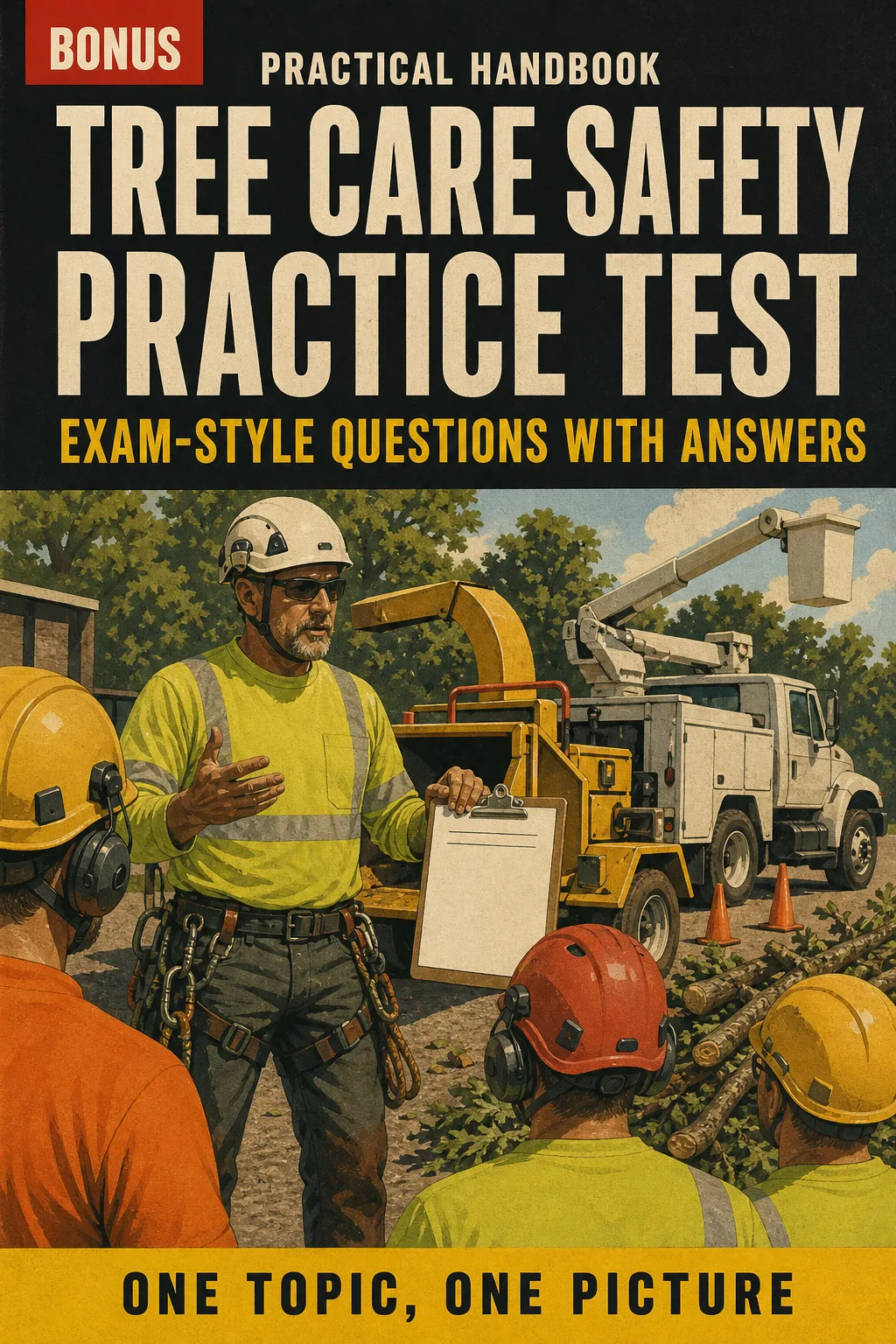
Tree Care Safety Practice Test: Exam-Style Questions with Answers

BONUS 1: «Tree Care Safety Practice Test: Exam-Style Questions with Answers»

Value on its own: US$ 17.90

Test yourself topic by topic and see right away which pages you need to review again, with every answer explained in one or two lines.

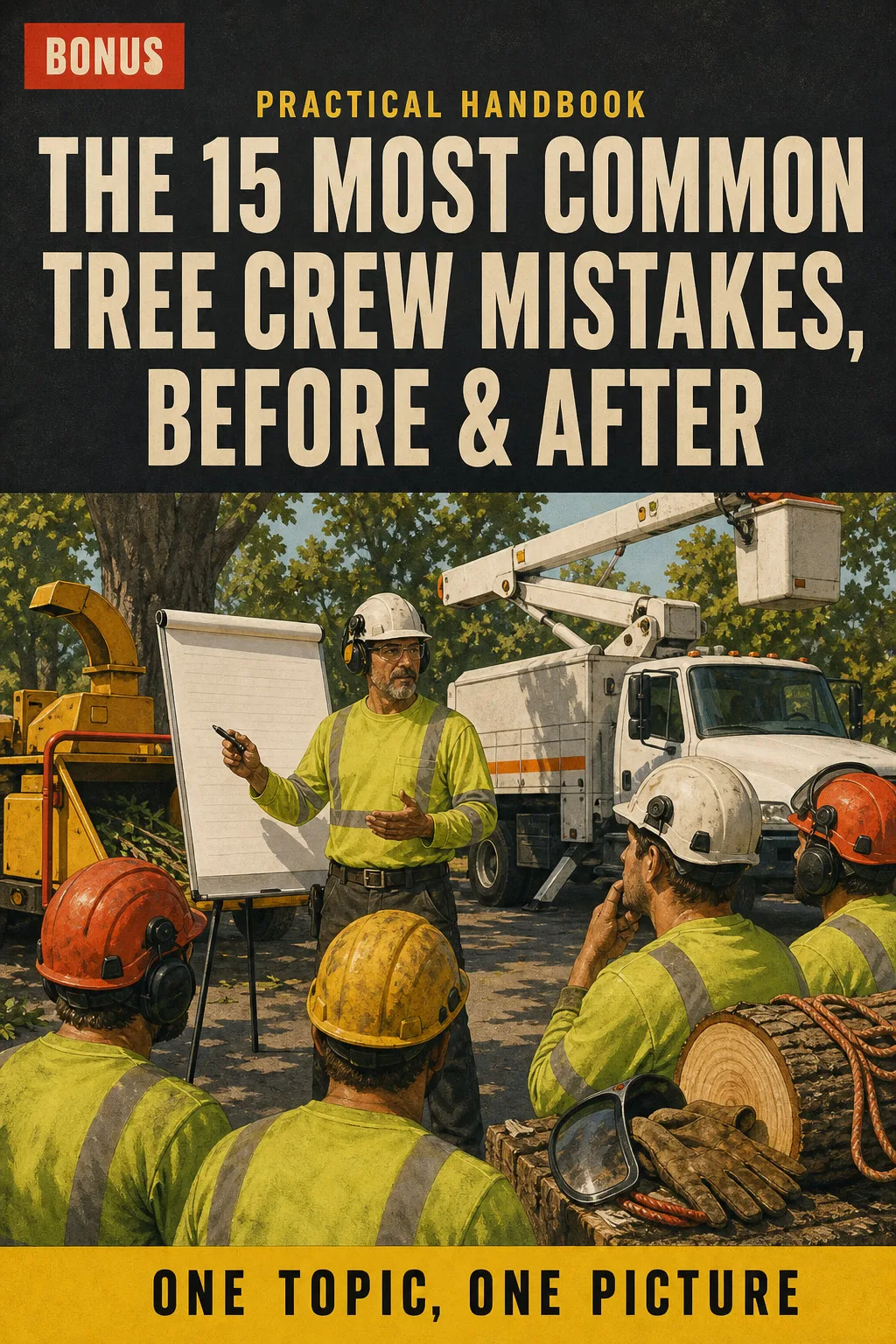
The 15 Most Common Tree Crew Mistakes, Before & After

BONUS 2: «The 15 Most Common Tree Crew Mistakes, Before & After»

Value on its own: US$ 14.90

See the frequent mistakes on a tree job drawn side by side with the safe way, so you can spot them on your crew before they turn into an incident.

Tree Care Safety Illustrated with 2 Free Books

  • Tree Care Safety Illustrated: 66 illustrated pagesUS$ 63
  • BONUS 1: Tree Care Safety Practice Test: Exam-Style Questions with AnswersUS$ 17.90
  • BONUS 2: The 15 Most Common Tree Crew Mistakes, Before & AfterUS$ 14.90
  • High-resolution PDF to printIncluded
Total value US$ 95.80
YOUR PRICE:
US$ 27
You save US$ 68.80
YES, I WANT TREE CARE SAFETY ILLUSTRATED FOR US$ 27

📄 This is a digital PDF book sent to your email: nothing is printed or shipped.

Secure purchaseEncrypted payment30-day guarantee

PDF by email: We email you Tree Care Safety Illustrated as a PDF, together with the two free books. It's a single payment: no installments, no extra charges.

Who This Book Is For

You're studying for a safety certification

You're studying for a safety certification

You review one topic per page, in the same order as the job, instead of fighting through the standard at night.

Your exam date is set

Your exam date is set

The numbers, zones and ratings are in boxes you can review in a few minutes, and the practice test shows you which pages to go back to.

You run a crew or a tree service

You run a crew or a tree service

You print the page you need, run the job briefing the same way every time and teach the new guy with one drawing.

Everything You Get Today

US$ 95.80US$ 27
YES, I WANT TREE CARE SAFETY ILLUSTRATED FOR US$ 27

📄 This is a digital PDF book sent to your email: nothing is printed or shipped.

30DAYS
GUARANTEE

30-Day Guarantee

Try Tree Care Safety Illustrated for 30 days, bonus books included.

We refund everything if the file won't open, if the book isn't what you see here, if you were charged twice or if the email doesn't arrive. Just email us.

You pay once. No subscriptions.

Frequently Asked Questions

Will it help with my tree care safety exam, even after 20 years of climbing?

It's built on ANSI Z133 and OSHA 29 CFR 1910.269, the standards most tree care safety exams draw from. Check your exam's reference list to confirm. It doesn't teach you to climb: it puts every crew safety topic on one drawn page, so you can review the rules and numbers you already work with.

Where does the content come from?

From the current edition of ANSI Z133 and OSHA 29 CFR 1910.269, 1910.67, 1910.95, 1910.333 and 1926 Subpart CC, explained in our own words and drawings. Every value carries its reference and is checked against the current edition.

Is it official material?

No. It's independent study material, not published or endorsed by TCIA, ANSI, OSHA or any certifying body.

Does it replace the course or hands-on training?

No. It helps you review and teach, but it doesn't replace training, the standard itself or your company's safety program. It doesn't give you a certificate, CEUs or training hours.

Are the practice questions the ones on the exam?

No. They're written for this book to help you check what you know, topic by topic. They are not official exam questions.

When and how do I get it?

The book and the 2 bonus books come as a PDF by email.

Do I have to pay every month?

No. It's a one-time payment.

Can I have it on paper?

Yes. The PDF is printable: print the whole book or just the pages you want to keep in the truck.

How does the refund work?

You have 30 days. We refund everything if the file won't open, if the book isn't what you see on this page, if you were charged twice or if the email doesn't arrive: just email us.

Before You Close This Page

No more rereading the standard with nothing sticking.

The drop zone, the kickback zone, the helmet ratings: you see them drawn and you've got them.

You walk into the exam knowing where everything is.

Drawings make studying faster.

The book is right below.

One-time payment: US$ 27 · Guarantee: 30 days · PDF by email

YES, I WANT TREE CARE SAFETY ILLUSTRATED FOR US$ 27

📄 This is a digital PDF book sent to your email: nothing is printed or shipped.